IFAC Agricontrol 2025 in Davis 参加紀行
参加日記
IFAC Agricontrol 2025参加紀行
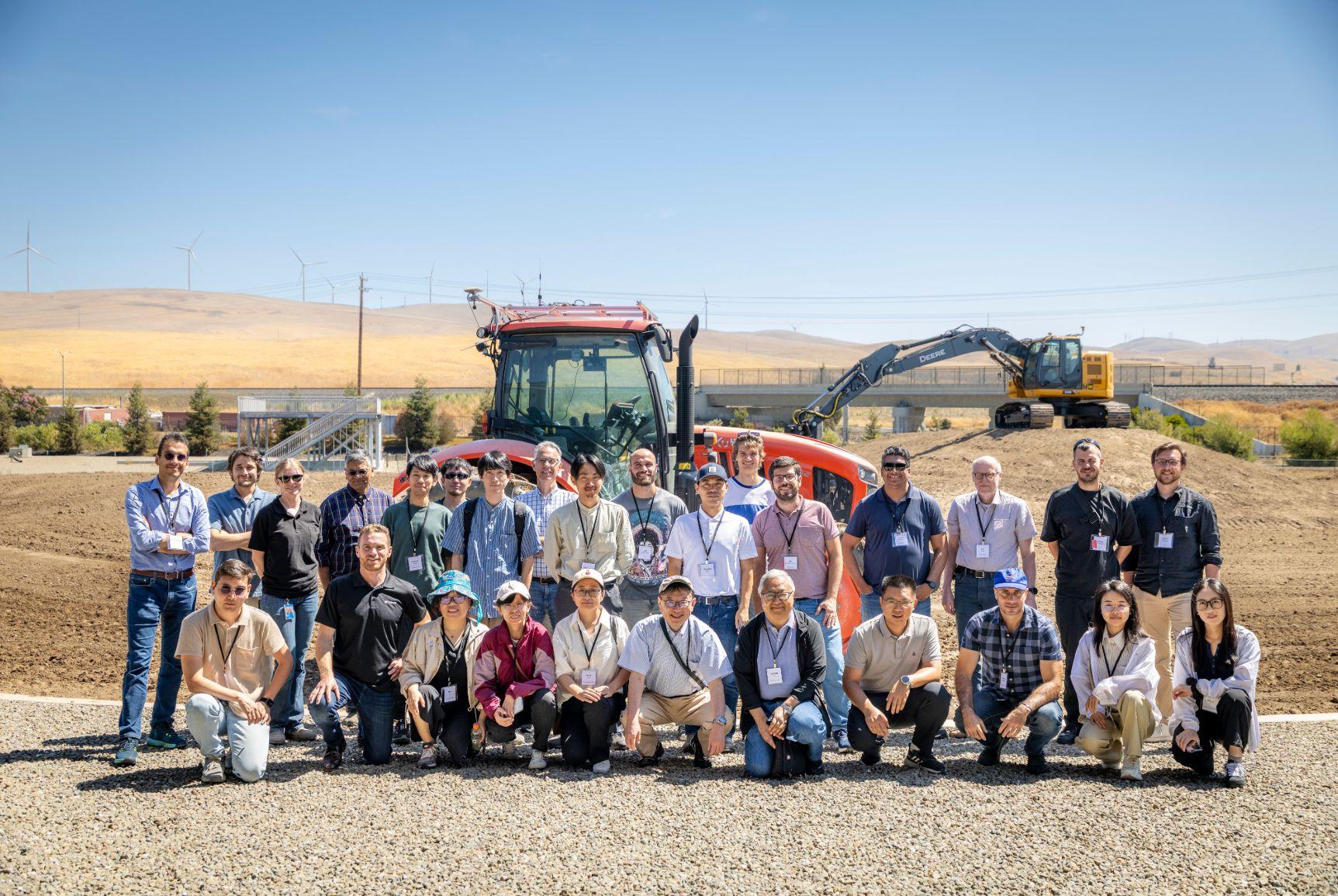
記事上部の写真は、AGRICONTROL 2025公式フォトギャラリーで公開されたカンファレンス写真を使用している。
1. そもそもIFACとは何か
IFACとは,International Federation of Automatic Controlの略であり,日本語にすれば国際自動制御連盟,あるいは国際制御工学会とでも呼ぶべき組織である。検索すると会計や芸術関係の団体も出てくるが,本稿で扱うIFACは,制御工学のIFACである。お間違いなきようお願いしたい。
IFACは,1950年代に設立された,自動制御分野の国際的な連合体である。広い意味での「制御」に関わる研究者たちが集まる場である。筆者は農業ロボットや遠隔操作を専門としているため,普段は農業工学,ロボティクス,通信,AIといった界隈をうろうろしている。しかし今回,ついに制御工学の本丸に近い場所へ論文を持っていくことになった。
IFAC自体は非常に由緒正しく,制御工学の歴史を背負ったコミュニティであることは間違いない。一方で,近年のIFAC World Congressや分科会は,IEEE系のトップカンファレンスのように,極端な低採択率を前面に出す場ではないという印象もある。筆者の理解では,採択率は比較的高めであり,いわゆる「通すこと自体が偉業」というタイプの学会ではない。
ただし,これは価値が低いという意味ではない。学会の価値は,採択率だけで決まるものではない。誰に読まれるか,誰と議論できるか,どのコミュニティに研究を置けるかによって決まる部分が大きい。論文は,通すためだけに書くものではない。どのコミュニティに自分の旗を立てるかというものでもある。
2. なぜAgricontrolに出すのか
今回参加するのは,IFACの分科会の一つであるAgricontrolである。名前の通り,農業システム,農業ロボット,環境制御,精密農業など,農業と制御が交差する領域の研究者が集まる会議である。ちなみにIFACは,「そんな分野も!?」というようなニッチな分科会もあるので,投稿を考えている読者の皆様は是非チェックされたい。
繰り返しになるが,IFACは採択率だけを見れば,おそらく超難関会議ではない。しかし,この会議の価値はそこではない。筆者が普段読んでいる農業工学・農業ロボット関連の論文に登場する世界中の研究者が,同じ会場に現れる可能性がある。
これは非常に大きい。自分の研究が世界中の研究者にどのように読まれるかは重要であるし,他の研究者の当たり前やコモンセンスを偵察することは意義深いと考えた。特に,研究室というのは非常に小さい単位であるため,普段考えている内容や視点,研究の進め方が,実は標準的なものから良くも悪くも逸脱している可能性さえある。そういう研究のマネジメント的な観点でも,学会に出ることで得られるものが多いと判断していた。
3. 前回の敗北と,今回のリベンジ
実は筆者は,前回のAgricontrolにも論文を投稿している。そして,悔しくもrejectされた。ここまで「IFACは難関ではない」と書いておきながら,自分はrejectされている。研究者の文章には,こういう自己矛盾がときどき必要である。人間味が出るからである。
前回の査読で特に忘れがたいのは,内容以前に英語に対するコメントである。たしか,“English is poor” という趣旨のコメントを頂いた。これはなかなか刺さる。研究内容が弱い,実験が足りない,既往研究が不足している,というコメントであれば,まだ研究者として正面から受け止められる。しかし,英語が悪いと言われると,研究以前の問題である。
もちろん,英語が読みにくければ,研究内容以前に伝わらない。そのため今回は,かなり推敲を重ねた。単に英語を直すだけではなく,何を主張する論文なのか,新規性をどこに置くのか,Agricontrolの読者にとって何が面白いのかを意識した。使える英語校正ツールは使い倒し,文明の利器で考えられる限りの武装を行った。
本音を言うと,前回の敗北は腹立たしかったが,結果的には論文に求められるクオリティを認識するきっかけになった。rejectは基本的に嫌なものである。しかし,たまに論文をまともにするための荒療治になる。
4. 論文投稿まで
今回の論文では,果樹園における農業ロボットの自動運転と,3D ToFカメラによる点群統合を扱った(Morita et al., 2025)。特に,異なる位置から撮影された点群を統合する際に,位置合わせが必要になり,多くの場合粗い位置合わせと精密な位置合わせが必要になる。
本研究条件のように,果樹園のような平行移動が多い場合,点群のフレーム間の移動量は横方向が支配的であるため,その横移動量を自動走行で使用しているGNSSから算出し,初期位置にすることとした。本来,粗い位置合わせは,RANSAC+FPFHによる特徴量ベースの初期位置推定が主流であるが,点群に写る対象が疎であったり密であったり一定でなく,RANSACなどのパラメータを一定にすると精度の良い初期位置が求まりにくい可能性があったが,GNSSによる横移動量をそのまま粗い位置合わせに適用することで,GNSSによる安定した情報を適用できるうえに,RANSACやFPFHの計算をスキップできると考えた。
航法センサを点群統合に使用する自体は新しいものではないものの,果樹園という並行移動の仮定や自動走行として体系的にまとまっていることをアピールすることにした。本音を言えば,GNSSだけではなくIMUも使用したほうが精度が上がるだろうと思いつつも,解析の関係上GNSS情報だけを使用したことは今でも心残りである。そのような迷いもあったが,最終的に投稿した。この時から,祈る時間が増えた。
5. 採択通知
採択通知が来たとき,まず思ったのは「リベンジ成功」であった。前回落ちた場所に,今度は通った。これは単純に嬉しい。採択率がどうであれ,自分が一度拒まれたコミュニティに再び論文を持っていき,今度は受け入れられたという事実には意味がある。
前回のrejectを考えると,今回の採択はひとつの区切りであった。英語が悪いと言われた論文から,少なくとも国際会議で発表できる論文へ。研究内容だけでなく,伝え方も少しは前に進んだのだと思う。研究者にとって成長とは,しばしば過去の査読コメントにもう一度会いに行き,今度は殴られずに済むことである。
6. カリフォルニアとかデイビスとか
会場となったUC Davisは,カリフォルニア州のDavisという街にある。位置としては,サクラメントの近郊というのが近いと思う。今回,サクラメント空港行きのフライトも候補にはあった。しかし,航空券の価格があまりにも高く,筆者はサンフランシスコ国際空港からBARTとAmtrakを乗り継いでDavisへ向かうことにした。
相変わらず,サンフランシスコ国際空港は少し暗くて怖い。もちろん,実際に危険な目にあったわけではない。しかし,長時間フライトで疲れた身体に,アメリカの空港特有の広さと無機質さと薄暗さが重なると,急に心細くなる。入国審査では,旅の目的や滞在費について聞かれた。学会で来たと説明したが,長旅で疲れた頭には,この時点ですでに英語の口頭試問であった。
BARTは,やや治安が悪そうに見えた。少なくとも,日本の鉄道に慣れた人間からすると,独特の緊張感がある。ただ,学生らしき人もちらほら乗っており,日常の交通機関として普通に使われているのだろうとも思った。途中,UC Berkeleyの近くを通ったように思う。UC Berkeley,UC Davis,UCなんとか。カリフォルニアにはUCが多すぎる。
Amtrakは,チケットの買い方が難しく,大変困惑した。正攻法はオンラインで乗る前に買うことらしい。Androidアプリを入れたので,次回は必ず前もって購入したい。
Davisに着いてからは,致死量のハンバーガーを食べた。人生で最も美味しいハンバーガーだった。疲労困憊の身体に極めて,暴力的に作用した。カロリーは友達である。さらに,Hazy IPAが有名なのか,ビールがあまりにも美味しかった。Davisのビールは,筆者の想像を超えていた。あまりに気に入ったため,後日わざわざ Non Non Juice というHazy IPAを買ってしまった。
気候もよかった。カリフォルニアらしく暖かいが,湿度は低く,非常に快適であった。日本特有の蒸し暑さとはかなり違う。空気が軽く,日差しが明るく,夕方になると少し涼しい。ここでランニングしたら,きっと気持ちがよいだろうと思った。
会場はUC Davisであったが,街と大学が密に融合しているように見えた。大学が街になっている感じである。のどかで大変住み心地も良さそうだった。大学内では,思ったより日本語が聞こえてきた。留学先として人気があるのだろうと思ったし,実際,自分が学生として留学するならかなり良い場所だとも感じた。研究環境があり,街は落ち着いていて,気候もよく,食べ物も美味しい。余談かつ後から知ったことだが,UC Davisは農業分野でも非常に評価が高い大学らしい(世界農業大学ランキングトップ5常連!)。
7. 当日
筆者の発表は,果樹園における農業ロボットの自動運転と3D ToFカメラの点群統合という,かなり応用寄りの内容である。そのため,できるだけセンサのマルチな活用と,果樹園という環境における仮定がどこまで使えるかを意識して話した。
質疑応答では,まず技術的な困難について質問があった。この質問は非常に明瞭であり,筆者も比較的落ち着いて答えることができた。国際会議の質疑応答は基本的に怖い。しかし,明確にコミュニケーションが取れた時は強い成長を感じるものである。
問題はその後であった。座長から追加の質問があったのだが,これが筆者のリスニング能力を完全に超越していた。英語であることは分かった。しかし,英語であること以外が分からなかった。筆者はその場で必死に音声を解析しようとしたが,必死の抵抗も虚しい。
数秒の沈黙の後,筆者はやむを得ず,聞こえた断片からイマジナリークエスチョンを生成した。そして,存在しない質問に対してそれらしい回答を始めた。本来ならば,研究者は分からないことを分からないと言うべきである。しかし,国際会議の壇上では,たまに分からないことを分からないと言う前に,口が勝手に動くことがある。これは恐らく生存本能である。話しながら座長の顔を見ると,案の定明らかに困惑していた。気まずさを感じる間もなく,発表終了を告げるベルが鳴った。救いの鐘であると同時に,判決の鐘でもあるように聞こえた。目の前が真っ暗になった。
幸い,その場はベルによって自然に終了した。発表とは,自分の研究を説明する場であると同時に,自分の英語リスニング能力の限界が公開測定される場でもある。この経験により,筆者は国際会議における最大の敵が,必ずしも難しい質問ではないことを学んだ。最も怖いのは,質問が難しいことではない。質問が何だったのか分からないことである。この事件は,今日の継続的な英語学習をさらに加速させることとなった。
8. 技術セッションで面白かった研究
今回のAgricontrol 2025の学術セッションにおいて、筆者にとって特に印象深かった研究を一つだけ紹介したい。
オランダのデルフト工科大の研究者であるMsaadら(2025)による,RL-Guided MPC for Autonomous Greenhouse Controlという,強化学習(RL)とモデル予測制御(MPC)を組み合わせた温室制御の研究である。MPCはモデルと制約を使って,現在から見える範囲(予測ホライゾン)の状態から最適化する。しかし,予測ホライゾンを長くすると計算量が増え,遠い未来の予測誤差も効いてくる。一方,RL方策は,多数のシミュレーションを通じて,ある状態が長期的に良いのか悪いのかを経験的に学習できる。この研究内では,終端コストをRLによって予測し,短いホライゾンによる予測でも十分な性能を発揮させていた。
この考え方は温室制御に限らず,農業ロボットにも応用できる可能性があると感じた。定常的な経路追従だけであれば,古典制御や単独のMPCで十分な場面も多い。しかし,障害物回避後の姿勢,旋回前後の姿勢,作業順序など,短いホライゾンよりも先に望ましい状態がある場面では,RLが学習した価値をMPCに埋め込む発想は有効かもしれない。ただし,ロボットでは温室制御よりも制御周期がはるかに短いため,リアルタイム性がどの程度担保できるかは慎重に検討する必要がある。
9. バンケット
学会のバンケットは,奇妙な光景である。昼間は理論や解析に怒り心頭の研究者(少なくともそう見える)たちが,夜になるとグラスを持ち,名札をつけたまま料理の前に並ぶ。研究者は普段,論文という形式でしか互いを知らない。しかしバンケットでは,論文の著者名の後ろにいる人間が突然現れる。この光景は少し新鮮であった。
今回のバンケットでは,欧州の研究者や米国の博士学生など,さまざまな参加者と話す機会があった。研究の話をしているはずが,いつの間にか日本文化やゲームの話に流れていく場面もあり,国際会議らしい不思議な緩さがあった。
また,海外ではLinkedInが主要なようで,あらかじめアカウントを作っておくことで,円滑なコネ作りを試みた。将来PIになり,研究を進めるうえで,ラフでも関係があるのは重要だと考えた。これも,研究を進めるうえでのコモンセンスの一つかもしれない。日本にいるよりも,ゆるいつながりを作っておくことの重要性があるように認識した。
10. テクニカルツアー Topcon USとMonarch Tractor
学会参加にテクニカルツアーが組まれており,2社の見学を行った。いずれも農業ロボットにおいて重要な立ち位置を持つ企業である。
Topcon USでは,トラクタの自動運転の実演が行われていた。圃場内に設定された経路に沿ってトラクタが走行する様子は,筆者たちが普段,研究室の実験やデモで行っている自動走行実演とも通じる部分があり,筆者は研究室の実演現場がフラッシュバックした。走行方式の詳細に踏み込んだ説明を受けたわけではないため,ここでは具体的な方式には触れないが,経路に沿って大型機械が安定して動く様子はやはり見応えがあった。印象的だったのは,担当していたエンジニアが,事前のテスト走行を終えた瞬間に達成感のある反応を見せていたことである。作ったものが想定通りに動いた瞬間の嬉しさは,国や立場が違ってもかなり共通しているのだと思う。
Monarch Tractorでは,電動トラクタの紹介や実演があった。人追従や果樹園内の樹列走行など,公開デモとして示された機能を見ることができた。複数のセンサや制御技術が組み合わさっていることを感じさせる内容で,これも普段の実演がフラッシュバックした。しかし,ハードウェアの完成度は非常に印象的だった。まずもってバッテリーが巨大だった。また,大きさも果樹用を謳っているだけあって絶妙であり,これがロボット化できるなら研究室に欲しい(贅沢)。
見学や学会を通して感じたこととして,外から見える範囲では,大学で扱っている技術と産業側の実装として似通っている部分も多いように思えた。一方で,製品として成立させるための作り込み,信頼性,運用設計には,研究室の実験とはおそらく相当な厚みがある。リーディングカンパニーやトップ研究室との距離感を見失わないためにも,他のところはここまでできている,という感覚を定期的に得ることは非常に重要だと実感した。
11. 振り返って
今回のIFAC Agricontrol参加は,筆者にとって初の国際会議発表であった。論文を発表し,質疑応答で一度目の前が真っ暗になり,研究者と話し,産業側の実演を見て,自分たちの研究が世界のどのあたりに立っているのかを確認する旅となった。
まず大きかったのは,自分たちの研究の立ち位置を肌で感じられたことである。農業ロボットの研究は,研究室の中だけで進めていると,良くも悪くも視野が閉じやすい。自分たちのシステムがどの程度進んでいるのか,逆に何が足りていないのか,国内の研究会や論文を読んでいるだけでは分かりにくい。論文を読むことは重要である。しかし,実際に会場へ行き,発表を聞き,企業の実演を見て,研究者と話すと,論文からは見えない温度感がある。研究の立ち位置は,引用文献だけではなく,現地の空気からも分かるものかもしれない。
また,今回の参加を通じて,コネクション作りの重要性も強く感じた。日本語で「コネ」と言うと少し胡散臭く聞こえるが,研究における緩いつながりはかなり重要そうである。バンケットや休憩時間で少し話した相手が,数年後に共同研究者になることもあるだろう。それに加え,研究は論文だけでは進まない。どこの研究室にどんな装置があるのか,どの国でどの作物のどの季節で実験ができるのか。そういう情報は,しばしば論文よりも雑談の中にあるように思う。
筆者としては,願わくばオセアニア方面に,年中実験できる伝手がほしい。北海道では冬季に屋外実験が難しくなる。一方,南半球であれば季節をずらして実験できる可能性があり,場所そのものが研究資源になる。研究費や装置だけではなく,実験できる季節と土地を持つことも,農業ロボット研究においてはかなり重要である。
今回の学会では,同期や博士学生がいたことも大きかった。研究者は基本的に個人で戦う職業である。しかし,同期や後輩の存在が,国際会議という異国のフィールドにおいて大変心強かった。暇な時間には,研究の話をしてもよいし,どうでもよい話をしてもよい。なんならいつもより移動時間など雑談できる時間が多く,雑談や研究について深堀りする時間となった。こうした相手がいることは,大変ありがたい。
ちなみに次にめぼしいIFACの会議として,韓国釜山で開催されるWorld Congressがあるため,こちらにも出してみたい。World Congressは文字通り世界大会(?)であり,分科会も含めた制御の祭典のようだ。Agricontorolに出た参加者にちょうどよい農業制御のセッションもあるので,そちらも採択されるように気を引き締めたい。
参考文献
- Morita, T., Akazawa, K., Yamasaki, Y., & Noguchi, N. (2025). On-the-go 3D Sensing of Vineyards Using an Autonomous Ground Vehicle and a Time-of-Flight Camera. IFAC-PapersOnLine, 59(23), 368–372. https://doi.org/10.1016/j.ifacol.2025.11.815
- Msaad, S., Harraway, M., & McAllister, R. D. (2025). RL-Guided MPC for Autonomous Greenhouse Control. IFAC-PapersOnLine, 59(23), 449–454. https://doi.org/10.1016/j.ifacol.2025.11.829
IFAC Agricontrol 2025 Participation Journal
The photo at the top of this article is a conference photo published in the official AGRICONTROL 2025 photo gallery.
1. What Is IFAC?
IFAC stands for the International Federation of Automatic Control. In Japanese, one might call it the International Federation of Control Engineering, or something close to that. If you search for “IFAC,” you may also find organizations related to accounting or the arts, but the IFAC discussed here is the one in control engineering. Please do not confuse them.
IFAC is an international federation in the field of automatic control, established in the 1950s. Broadly speaking, it is a place where researchers involved in “control” gather. My own field is agricultural robotics and teleoperation, so I usually wander around the worlds of agricultural engineering, robotics, communication technologies, and AI. This time, however, I finally brought a paper to a place rather close to the heartland of control engineering.
IFAC itself has considerable prestige, and there is no doubt that it carries the history of control engineering. On the other hand, my impression is that recent IFAC World Congresses and IFAC symposia are not venues that advertise extremely low acceptance rates in the way some top IEEE conferences do. As far as I understand, the acceptance rate is relatively high, and it is not the kind of conference where “getting accepted” itself is treated as a heroic achievement.
That does not mean the conference has little value. The value of a conference is not determined by acceptance rate alone. It also depends on who reads your work, who you can discuss it with, and into which community you can place your research. A paper is not written only to be accepted. It is also a way of deciding in which village you want to raise your flag.
2. Why Submit to Agricontrol?
This time, I attended Agricontrol, one of the IFAC symposia. As its name suggests, it is a conference where researchers working at the intersection of agriculture and control gather: agricultural systems, agricultural robots, environmental control, precision agriculture, and related topics. Incidentally, IFAC has many niche symposia that make you think, “There is a conference for that too?” Anyone considering submitting a paper should take a look.
Again, if one looks only at the acceptance rate, IFAC is probably not an extremely difficult conference. But that is not where its value lies. There is a real possibility that researchers from around the world, whose papers I normally read in agricultural engineering and agricultural robotics, will be in the same room.
That is significant. It matters how my research is read by researchers around the world. It is also meaningful to scout out what other researchers take for granted, what their common sense is, and how they manage their work. A laboratory is a very small unit. The way we think, the perspectives we take, and the way we proceed with research may, for better or worse, deviate from what is standard elsewhere. From that kind of research-management perspective as well, I felt there was much to gain by attending the conference.
3. The Previous Defeat and This Attempt at Revenge
In fact, I had submitted a paper to the previous Agricontrol as well. Unfortunately, it was rejected. After writing this much about how “IFAC is not a particularly difficult conference,” I should admit that I myself was rejected. A researcher’s writing sometimes needs this kind of self-contradiction. It gives it a human touch.
What I remember most vividly from the previous review was not about the technical content, but about the English. If I remember correctly, I received a comment along the lines of “English is poor.” That one stung. If the comment had been that the research content was weak, that the experiment was insufficient, or that the related work was lacking, I could have faced it directly as a researcher. But when one is told that the English is bad, it feels like the problem lies before the research even begins.
Of course, if the English is difficult to read, the research content will not come through. So this time, I revised the paper carefully. I did not only fix the English. I paid close attention to what the paper was actually claiming, where the novelty lay, and what would be interesting to Agricontrol readers. I used every English editing tool I could use, arming myself with all the tools of civilization available to me.
To be honest, the previous rejection irritated me. But in the end, it helped me understand the level of quality expected of a paper. Rejection is, in principle, unpleasant. But once in a while, it becomes a harsh treatment that makes a paper decent.
4. Before Submission
In this paper, I dealt with autonomous driving of an agricultural robot in an orchard and point-cloud integration using a 3D ToF camera (Morita et al., 2025). In particular, when integrating point clouds captured from different positions, registration is required. In many cases, this involves both coarse registration and fine registration.
Under the conditions of this study, where the robot mainly moves in parallel along orchard rows, the displacement between point-cloud frames is dominated by lateral translation. I therefore decided to calculate this lateral displacement from the GNSS information already used for autonomous driving and use it as the initial position for registration. Normally, coarse registration is often performed by feature-based initial alignment, such as RANSAC combined with FPFH. However, the objects captured in the point clouds were not always consistent; depending on the scene, they could be sparse or dense. If the same RANSAC-related parameters were used throughout, there was a possibility that a sufficiently accurate initial alignment would not be obtained. By directly applying the GNSS-derived lateral displacement to coarse registration, I expected to use relatively stable navigation information while also skipping the computational cost of RANSAC and FPFH.
Using navigation sensors for point-cloud integration is not new in itself. Even so, I decided to emphasize the assumptions specific to orchards, especially the predominance of parallel motion, and the fact that the method was organized as part of an autonomous-driving system. To be honest, I still think that using IMU information in addition to GNSS would probably have improved the accuracy. Because of the analysis procedure, however, I ended up using only GNSS information, and that remains something of a regret. Even with that uncertainty, I eventually submitted the paper. From that moment on, the amount of time I spent praying increased.
5. The Acceptance Notification
When the acceptance notification arrived, the first thing I thought was: “revenge achieved.” I had been rejected by the same community before, and this time I got in. That was simply satisfying. Regardless of the acceptance rate, there is meaning in bringing a paper back to a community that once turned you away and this time being accepted.
Considering the previous rejection, this acceptance felt like a milestone. A paper that had once been criticized for its English had become, at least, a paper that could be presented at an international conference. I think not only the research content but also the way I communicated it had moved forward a little. For a researcher, growth is often a matter of going back to meet a past reviewer comment and, this time, managing not to get punched by it.
6. California, Davis, and Related Matters
The venue, UC Davis, is located in the city of Davis, California. Geographically, I would say it is near Sacramento. Flying directly to Sacramento was one option, but the ticket price was far too high, so I decided to travel from San Francisco International Airport to Davis by taking BART and Amtrak.
As always, San Francisco International Airport felt a little dark and intimidating. Nothing dangerous actually happened. But when a body exhausted from a long flight meets the distinctive vastness, inorganic atmosphere, and dimness of an American airport, one suddenly feels vulnerable. At immigration, I was asked about the purpose of my trip and how I would cover my expenses. I explained that I had come for a conference, but to my travel-worn brain, this already felt like an oral examination in English.
BART looked somewhat rough. At least to someone used to Japanese trains, it had a particular sense of tension. Still, there were some people who looked like students, and I suppose it is simply used as an everyday means of transportation. At some point, I think we passed near UC Berkeley. UC Berkeley, UC Davis, UC something else. California has too many UCs.
Amtrak was confusing, especially when it came to buying a ticket. Apparently, the proper way is to buy it online before boarding. I installed the Android app, so next time I will make sure to buy the ticket in advance.
After arriving in Davis, I ate a lethal amount of hamburger. It was the best hamburger of my life. It acted on my exhausted body in an extremely violent way. Calories are friends. The Hazy IPA was also astonishingly good. Perhaps Davis is known for it, or perhaps I simply happened to encounter a good one, but the beer exceeded my expectations. I liked it so much that I later went out of my way to buy a Hazy IPA called Non Non Juice.
The climate was also wonderful. It was warm in the way California is warm, but the humidity was low and the air was very comfortable. It felt quite different from the humid heat characteristic of Japan. The air was light, the sunlight was bright, and in the evening it became slightly cool. I thought running here would surely feel good.
The venue was UC Davis, and the town and university seemed closely integrated. It felt less like there was a university inside a town and more like the university itself had become part of the town. It was peaceful and looked very pleasant to live in. I heard more Japanese on campus than I expected. I assumed it must be a popular study-abroad destination, and in fact I also felt that, if I were to study abroad as a student, it would be a very good place. There is a research environment, the town is calm, the climate is pleasant, and the food is good. As an aside, I later learned that UC Davis is also highly regarded in agriculture, apparently a regular in the top five of global agricultural university rankings.
7. The Day of the Presentation
My presentation was on autonomous driving of an agricultural robot in an orchard and point-cloud integration using a 3D ToF camera. It was a fairly application-oriented topic. For that reason, I tried to emphasize the multi-purpose use of sensors and how far the assumptions made in an orchard environment could be used.
During the Q&A, I first received a question about technical difficulties. This question was very clear, and I was able to answer it relatively calmly. Q&A at an international conference is basically frightening. However, when communication is clear, one can feel a strong sense of growth.
The problem came afterward. The session chair asked an additional question, but it completely exceeded my listening ability. I understood that it was English. I understood nothing beyond the fact that it was English. I desperately tried to parse the audio signal on the spot, but despite my resistance, my internal processing system saturated.
After a few seconds of silence, I had no choice but to generate an imaginary question from the fragments I had heard. Then I began answering that nonexistent question as if it were real. In principle, researchers should say that they do not understand when they do not understand. However, on the stage of an international conference, sometimes the mouth starts moving before one can say “I do not understand.” I suspect this is a survival instinct. As I spoke, I looked at the chair’s face and, as expected, he looked clearly puzzled. Before I could fully feel the awkwardness, the bell rang to signal the end of the presentation. It sounded both like a bell of salvation and a bell of judgment. My vision went dark.
Fortunately, the session ended naturally thanks to the bell. A presentation is a place to explain one’s research. At the same time, it is also a public measurement of the limits of one’s English listening ability. Through this experience, I learned that the greatest enemy at an international conference is not necessarily a difficult question. The most frightening thing is not that the question is difficult. It is that you do not know what the question was. This incident further accelerated my ongoing English study.
8. An Interesting Study from the Technical Sessions
Among the academic sessions at Agricontrol 2025, there was one study that left a particularly strong impression on me.
It was “RL-Guided MPC for Autonomous Greenhouse Control” by researchers from Delft University of Technology in the Netherlands (Msaad et al., 2025), a study on greenhouse control that combines reinforcement learning (RL) and model predictive control (MPC). MPC uses a model and constraints to optimize control actions over the range currently visible from the present state, namely the prediction horizon. However, if the prediction horizon is extended, the computational cost increases, and prediction errors in the distant future also begin to matter. In contrast, an RL policy can learn, through many simulations, whether a given state is likely to be good or bad in the long term. In this study, the terminal cost was estimated using RL, allowing the controller to achieve sufficient performance even with a short prediction horizon.
I felt that this idea could potentially be applied not only to greenhouse control but also to agricultural robots. For steady path tracking alone, classical control or standalone MPC is often sufficient. However, in situations where the desirable state lies beyond a short prediction horizon—such as the posture after obstacle avoidance, the posture before and after turning, or the order of field operations—the idea of embedding values learned by RL into MPC may be useful. That said, robots generally require much shorter control cycles than greenhouse control, so whether real-time performance can be guaranteed would need to be examined carefully.
9. The Banquet
A conference banquet is a strange sight. During the day, people who seem at least half-angry about theory and analysis gather in the evening with glasses in hand, still wearing their name tags, standing in line in front of food. Researchers usually know each other only in the form of papers. At a banquet, however, the human beings behind the author names suddenly appear. I found this scene rather refreshing.
At this banquet, I had the chance to talk with a variety of participants, including researchers from Europe and doctoral students from the United States. Some conversations began with research and somehow drifted into Japanese culture or games. That loose, unpredictable mixture felt very much like an international conference.
I also realized that LinkedIn seems to be a major tool overseas, so I had created an account in advance and tried to make connections smoothly. If I become a PI in the future and conduct research, I think even casual relationships will matter. This may also be one kind of common sense in conducting research. Compared with staying in Japan, I recognized more strongly the importance of creating loose connections.
10. Technical Tour: Topcon US and Monarch Tractor
The conference included a technical tour, during which we visited two companies. Both occupy important positions in agricultural robotics.
At Topcon US, there was a demonstration of autonomous tractor driving. The tractor ran along a path set in the field, and the scene had something in common with the autonomous-driving demonstrations we usually conduct in our laboratory experiments and demos. I had a flashback to our own demonstration sites. Since I did not receive a detailed explanation of the driving method, I will avoid naming any specific control approach here, but it was impressive to see a large machine moving steadily along the planned path. What stayed with me was the reaction of the engineer in charge after a preliminary test run. The visible relief and satisfaction when a system behaves as intended felt very familiar, regardless of country or position.
At Monarch Tractor, we saw an introduction and demonstration of an electric tractor. As part of the public demonstration, we were shown functions such as person-following and row driving inside an orchard. The demonstration gave the impression of multiple sensing and control technologies working together, and once again I had a flashback to our own usual demonstrations. Still, the hardware was truly impressive. First of all, the battery was enormous. The size was also exquisite, fitting the claim that it was designed for orchards. If this could be made into a robotic platform, I would want one in our laboratory. A luxury, of course.
Through the company visits and the conference as a whole, I felt that, at least at the conceptual level visible from the outside, there are many points of connection between the technologies studied in universities and those implemented in industry. At the same time, the refinement, reliability, and operational design required to make something work as a product have a depth that is different from laboratory experiments. I also believe it is important not to lose sight of the distance between oneself and leading companies or top laboratories. For that reason, periodically gaining the bodily sense that “other places have already reached this point” is very important.
11. Looking Back
This IFAC Agricontrol was my first international conference presentation. I presented a paper, experienced one moment in Q&A when my vision went dark, talked with researchers, saw industrial demonstrations, and returned with a clearer sense of where our research stands in the world.
The biggest gain was that I could feel, physically, the position of our research. When agricultural robotics research is carried out only within a laboratory, one’s perspective can easily become narrow, for better or worse. It is difficult to know, only by attending domestic meetings or reading papers, how far our system has progressed and what it still lacks. Reading papers is important. But when one actually goes to the venue, listens to presentations, sees company demonstrations, and talks with researchers, there is a sense of temperature that cannot be seen from papers alone. The position of a research project may be understood not only from references, but also from the air of the place.
I also strongly felt the importance of building connections. In Japanese, the word “kone” can sound somewhat suspicious, but loose connections in research seem to be quite important. Someone you talk to briefly at a banquet or during a break may become a collaborator a few years later. Moreover, research does not move forward through papers alone. Which laboratory has what equipment, in which country one can conduct experiments on which crop and in which season—such information often seems to exist more in casual conversations than in papers.
Personally, I would like, if possible, to have connections in Oceania where experiments can be conducted throughout the year. In Hokkaido, outdoor experiments become difficult in winter. In the Southern Hemisphere, however, it may be possible to shift seasons and continue experiments. The place itself becomes a research resource. In agricultural robotics research, not only research funding and equipment, but also the season and land where experiments can be conducted are extremely important.
It was also significant that my peers and a doctoral student were there at this conference. Researchers basically fight as individuals. However, the presence of peers and younger researchers was very reassuring in the foreign field of an international conference. During free time, we could talk about research or about completely trivial matters. If anything, there was more time than usual to talk during travel and waiting periods, and those conversations became opportunities to dig deeper into both research and idle topics. Having such people around is something to be grateful for.
Incidentally, the next IFAC conference that seems particularly attractive is the World Congress in Busan, Korea. I would like to submit there as well. As the name suggests, the World Congress is something like the world championship of control engineering, or perhaps a festival of control that includes many symposia and sessions. There also appears to be an agricultural control session suitable for participants from Agricontrol, so I would like to brace myself and aim for acceptance there as well.
References
- Morita, T., Akazawa, K., Yamasaki, Y., & Noguchi, N. (2025). On-the-go 3D Sensing of Vineyards Using an Autonomous Ground Vehicle and a Time-of-Flight Camera. IFAC-PapersOnLine, 59(23), 368–372. https://doi.org/10.1016/j.ifacol.2025.11.815
- Msaad, S., Harraway, M., & McAllister, R. D. (2025). RL-Guided MPC for Autonomous Greenhouse Control. IFAC-PapersOnLine, 59(23), 449–454. https://doi.org/10.1016/j.ifacol.2025.11.829